


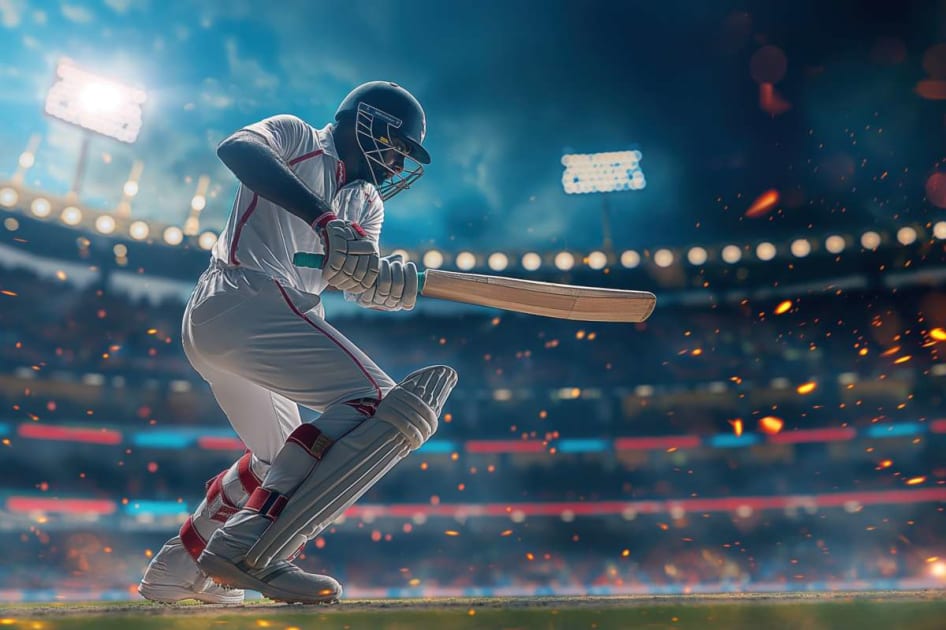
How Machine Learning, AI, LLMs, RAG & Deep Learning Are Revolutionizing the Game of Cricket
Discover how AI, Machine Learning, LLMs & RAG are revolutionizing cricket - from DRS and real-time score prediction to smart coaching and fan experiences. Cricket is no longer just a game of bat and ball - it is now powered by Artificial Intelligence, Machine Learning, Large Language Models, and cutting-edge data pipelines. From Hawk-Eye ball tracking and real-time score prediction to AI-generated commentary in 10 languages, technology is reshaping every corner of the sport.
Introduction: The New Frontier of Cricket Analytics
Cricket has always been a game of statistics: batting averages, bowling economy rates, strike rates, and partnership totals. But in the 2020s, the game has entered an entirely new era. Artificial Intelligence (AI), Machine Learning (ML), Large Language Models (LLMs), and Retrieval-Augmented Generation (RAG) are no longer tools restricted to Silicon Valley labs: they are actively transforming how cricket is played, coached, broadcast, and experienced by hundreds of millions of fans worldwide.
From predicting a batsman's next shot to generating real-time match commentary in 10 different languages, the fusion of cricket and technology is breathtaking. Twenty years ago, a cricket analyst sat in the stands with a notepad, manually recording where each ball landed. Today, a network of AI systems captures, processes, and analyses every delivery in milliseconds: generating insights that would have taken that analyst weeks to compile manually.
In this complete guide, we will walk through every major technology transforming cricket: what each one is, how it works step by step, where it operates in the cricket ecosystem, what infrastructure it requires, and what ultimate goal it serves. Whether you are a cricket fan curious about the technology behind DRS, a data scientist interested in sports applications, or a coach looking to understand the tools at your disposal: this is the most comprehensive guide available.
1. Machine Learning (ML) in Cricket
What is Machine Learning?
Machine Learning is a branch of Artificial Intelligence where systems learn patterns from historical data without being explicitly programmed. Instead of telling a computer "if the pitch turns, spin bowlers do better": you show it 50,000 matches and let it figure that out by itself. In cricket, ML models are trained on thousands of past matches to discover hidden patterns in player behaviour, pitch conditions, weather, and match situations.
How ML Works in Cricket: Step by Step
Step 1: Data Collection: Historical match data is gathered from various sources. This includes ball-by-ball records going back to the 1970s, player statistics, ground conditions, weather data, pitch reports, umpire decisions, and even crowd noise levels: all stored in structured databases containing billions of data points.
Step 2: Feature Engineering: Raw data is transformed into meaningful numerical features. For example, a single feature might be: "This batsman's average against left-arm spinners, on turning pitches, in the last 5 overs of a T20 innings, when chasing more than 160." The more precise and relevant the features, the more accurate the model's predictions become.
Step 3: Model Training: Algorithms such as Random Forest, XGBoost, Neural Networks, and Gradient Boosting are trained on this labeled dataset. The model adjusts thousands of internal parameters until it can reliably predict outcomes: like whether a batsman will score a boundary on the next ball, or whether a team will successfully defend a given score on a specific ground.
Step 4: Prediction & Inference: The trained model is deployed on live match data to make real-time predictions about outcomes, player form, and tactical decisions: during an actual match, updating after every single delivery.
Step 5: Feedback Loop: Prediction results are continuously compared to actual outcomes. The model is regularly retrained with new match data to improve accuracy over time. This is how ML systems get smarter with every passing season: they never stop learning.
What ML Achieves in Cricket
- Player Performance Prediction: Estimating how a batsman will perform against a specific bowler type at a particular ground: before the match even begins.
- Injury Risk Assessment: Detecting early signs of fatigue or biomechanical stress in fast bowlers by analysing workload data, preventing injuries before they happen.
- Team Selection: Recommending the optimal playing XI based on opposition strengths, pitch reports, weather forecasts, and recent form.
- Match Strategy: Suggesting batting orders, powerplay bowling strategies, and optimal field placements based on real-time match situations.
- Auction Intelligence: Franchise teams use ML models to value players before the auction: calculating a precise expected performance value, helping teams spend strategically.
What ML Requires
Large labeled datasets covering at least 5:10 years of historical match data, powerful GPU compute servers for training deep learning models, data scientists who also understand cricket deeply, real-time data pipelines to ingest live match feeds, and model monitoring dashboards to track prediction accuracy over time.
2. Artificial Intelligence (AI): The Brain Behind Modern Cricket
What is AI in Cricket?
AI in cricket refers to intelligent systems that can make decisions, recognise patterns, and automate tasks that previously required human expertise. AI goes beyond simple statistics: it can watch video footage, analyse player biomechanics, and make strategic recommendations that even experienced coaches might miss.
While ML is a subset of AI focused on learning from data, broader AI in cricket includes computer vision, decision support systems, automated video analysis, and intelligent officiating tools: all working together as a unified intelligence layer over the sport.
Key AI Applications in Cricket
Computer Vision for Ball Tracking: AI-powered ball tracking systems use multiple high-speed cameras and computer vision algorithms to track the exact trajectory of a cricket ball in three dimensions. This powers the Decision Review System (DRS). When a batsman reviews an LBW decision, AI calculates with sub-centimetre accuracy whether the ball would have hit the stumps: providing objective data to override the on-field umpire's judgment when the evidence is conclusive.
Umpire Decision Support: AI analyses edge detection from infrared cameras and ball-tracking data in real time to assist third umpires. The system cross-references audio spikes, infrared heat maps, and ball trajectory simultaneously: something no human brain can process in real time.
Video Analysis & Shot Recognition: AI models trained on match footage can classify every shot played: a cover drive, a reverse sweep, a ramp shot, a helicopter shot: and correlate each shot type with outcomes across different match situations and pitch conditions.
Automated Highlights Generation: AI identifies wickets, boundaries, dropped catches, and dramatic moments to automatically generate highlight reels. What used to take a production team hours now happens in minutes: with AI selecting the most significant moments based on crowd noise levels, player reactions, run rate impact, and match context.
Coaching Intelligence: Franchise teams deploy AI to analyse opposition batsmen's weaknesses and suggest bowling strategies before every match. AI-generated opposition reports map each batsman's vulnerable zones, scoring preferences, and technical weaknesses in granular detail.
The Goal of AI in Cricket
To reduce human error, accelerate decision-making, and unlock insights that are impossible for human analysts to compute in real time. AI in cricket is about giving teams, broadcasters, and officials a decisive, consistent, and scalable intelligence advantage.
3. Large Language Models (LLMs): Cricket's Intelligent Storyteller
What is an LLM?
A Large Language Model is a deep learning model trained on massive volumes of text data: books, websites, articles, match reports, commentary transcripts, and social media posts: billions of words covering virtually every topic imaginable. These models can understand, reason about, and generate human-quality text in any domain, including cricket, with remarkable fluency and contextual awareness.
What makes LLMs remarkable is that they do not just store and retrieve information: they genuinely understand language, context, tone, and nuance. They can write like an excited commentator, explain like a patient coach, or analyse like a sharp statistician: all from the same underlying model.
How LLMs Are Used in Cricket
Automated Match Commentary: LLMs generate natural, engaging ball-by-ball commentary in multiple languages: English, Hindi, Tamil, Urdu, Sinhala: by processing structured match data and converting it into fluent narrative text. A simple data event like "boundary, cover drive, 4 runs" becomes natural flowing commentary in seconds.
Fan Interaction Chatbots: Cricket boards and apps deploy LLM-powered chatbots that answer fan questions about match schedules, player statistics, squad selections, historical records, and ticket bookings: in natural conversational language, 24 hours a day, without requiring human agents.
Press Release & Report Generation: Post-match reports, player profiles, and official press releases are auto-generated by LLMs from structured scorecard data, saving hours of manual writing by communications teams after every single match.
Coaching Reports: LLMs digest vast amounts of opposition analysis data and write readable, structured strategic reports for coaches and team management: turning thousands of data points into clear, actionable narrative recommendations.
Social Media Content at Scale: Franchise teams use LLMs to generate engaging social media posts, match previews, player milestone celebrations, and reaction content: publishing dozens of posts per match across multiple languages simultaneously.
The Process: How an LLM Generates Commentary
Step 1: Structured Input: The LLM receives structured event data containing bowler details, batsman details, speed, length, line, shot type, result, running score, and wagon wheel zone.
Step 2: Prompt Construction: A carefully crafted system prompt instructs the LLM to act as a specific commentator persona: energetic, analytical, or regionally appropriate: with instructions about tone, length, and contextual awareness of the match situation.
Step 3: Text Generation: The LLM produces fluent, contextual, human-quality commentary within milliseconds.
Step 4: Multilingual Parallel Output: Simultaneously, the same event data regenerates commentary in regional languages: adapting idioms and expressions culturally rather than just translating word-for-word.
What LLMs Require
Access to powerful LLM APIs, high-quality structured match data feeds, expert prompt engineering, low-latency infrastructure for real-time output under 2:3 seconds per ball, and human review protocols for quality control during live broadcasts.
4. Retrieval-Augmented Generation (RAG): Cricket's Knowledge Engine
What is RAG?
Retrieval-Augmented Generation is a cutting-edge AI architecture that combines the generative power of LLMs with the precision of search-based retrieval. Instead of relying solely on what an LLM memorised during training: which has a knowledge cutoff and can be outdated or hallucinated: RAG first retrieves relevant, up-to-date documents from a live knowledge base, and then uses an LLM to generate a response grounded in that retrieved information.
Think of it as the difference between asking a friend who last read about cricket 2 years ago versus asking a friend who just read today's newspaper AND has a photographic memory of every match ever played.
How RAG Works in Cricket: Step by Step
Step 1: Knowledge Base Creation: A comprehensive cricket knowledge base is built and continuously updated: articles, match reports, historical scorecards, player biographies, venue statistics, ball-tracking data, and coach interviews: all converted into vector embeddings (mathematical representations of text that capture meaning and context).
Step 2: User Query: A fan asks a detailed question about a player's historical performance in specific match conditions.
Step 3: Retrieval: The system uses a vector database to instantly find the most semantically relevant documents from thousands of records matching the query.
Step 4: Augmented Prompt: The retrieved documents are combined with the user's original query and fed to an LLM as additional context: giving the model accurate, current, specific information to reason from.
Step 5: Generation: The LLM generates a precise, factual, cited answer that draws from retrieved data rather than hallucinating statistics from outdated training memory.
Step 6: Delivery: The fan receives a detailed, accurate, current answer: with sources cited for verification.
RAG Applications in Cricket
- Smart Fan Q&A: Complex multi-part questions about match history, player records, and head-to-head comparisons: answered accurately and instantly.
- Analyst Dashboards: Team analysts query vast opposition databases using plain English: no SQL required.
- Live Match Intelligence: During a match, RAG retrieves real-time pitch data, over statistics, and player fatigue metrics: feeding it to an LLM for live tactical recommendations.
- Talent Scouting: Scouts research emerging players from domestic databases across 20+ countries simultaneously using natural language queries.
5. Advanced Analytics & Real-Time Score Prediction
How Real-Time Score Prediction Works
Real-time score prediction is one of the most visible AI applications in modern cricket broadcasting. You see it on your screen every match: "Predicted Score: 187:5 (end of 20 overs)." Here is exactly how it works:
Live Data Ingestion: Every ball is tracked in real time: speed, trajectory, bounce, shot type, runs scored, wickets, wides, no-balls: fed into the prediction model within milliseconds.
Historical Pattern Matching: The ML model compares the current match state with thousands of similar historical situations and their final outcomes.
Dynamic Model Updates: The prediction updates after every single delivery: a wicket mid-over can shift the predicted score by 15:20 runs in a single ball.
Win Probability Engine: Alongside score prediction, a separate model calculates live win probability for each team: generated by running thousands of simulated match completions from the current state every few seconds, displayed as the dynamic percentages you see on screen.
Other Key Analytics Systems
Wagon Wheel Analysis: AI processes ball-by-ball shot data to generate wagon wheel visualisations showing where a batsman scores: helping fielding teams plug gaps and identify preferred scoring zones before planning field settings.
Pitch Map Analytics: Every delivery is plotted on a 3D pitch map, revealing bowling patterns, length tendencies, and vulnerability zones: coaches use this to decide exactly where each bowler should target each batsman.
Player Workload Management: AI tracks cumulative workload of fast bowlers across an entire season: balls bowled, sprint distances, recovery time: to prevent overuse injuries in long tournaments.
Expected Runs (xRuns) Models: Similar to Expected Goals in football, cricket now has xRuns models that calculate how many runs a shot should have produced based on its quality and placement: separating genuinely skilled batting from lucky outcomes.
Fantasy Cricket AI: Fantasy cricket platforms use ML to help hundreds of millions of users select optimal fantasy teams based on predicted player performances, pitch conditions, and head-to-head data.
6. Where Each Technology Operates in Cricket
 |
7. Real-World Examples from Cricket Today
Franchise teams use proprietary ML platforms for auction strategy: calculating each player's expected performance value before spending large amounts at player auctions. Every bid is backed by a model, not just instinct.
Cricket boards use AI-powered biomechanical analysis tools to monitor bowling actions of fast bowlers: protecting against illegal actions and career-ending injuries through early detection of stress patterns.
Ball tracking technology is the gold standard for reviews, using multiple cameras per ground and AI to reconstruct ball trajectory in three dimensions for LBW reviews: now deployed at every major international venue worldwide.
Broadcasters deploy AI for automated highlight clipping, real-time score graphics, predicted score overlays, and personalised content: reaching hundreds of millions of viewers during major tournaments.
Sports data platforms use RAG architecture to answer complex historical cricket queries from fans in natural language: retrieving accurate answers from over 100 years of match records.
Fantasy cricket platforms use ML to generate AI-powered player selection recommendations for hundreds of millions of registered users across every format and tournament.
8. Deep Learning & Neural Networks in Cricket
How Deep Learning Goes Further Than ML
If Machine Learning is the brain of cricket analytics, Deep Learning is the subconscious: processing massive amounts of raw data like video frames, audio signals, and sensor readings without needing humans to manually define what patterns to look for. Deep Learning uses multi-layered artificial neural networks to automatically extract complex patterns from raw data at a scale and depth impossible for traditional ML.
Three Key Neural Architectures in Cricket
Convolutional Neural Networks (CNNs) analyse video frames from stadium cameras to detect the exact moment of ball release from a bowler's hand, classify a batsman's foot movement and body position before playing a shot, and identify illegal bowling actions by measuring elbow flexion angle frame by frame.
Recurrent Neural Networks (RNNs) & LSTMs process sequences of events over time: perfect for cricket because cricket is fundamentally sequential. An LSTM model looks at 30 balls of a spell, learns the bowler's pattern, and predicts what the next delivery will likely be: giving batsmen and coaches a predictive edge.
Transformer Models: the same architecture powering modern large language models: are now being applied to ball-by-ball match sequences, treating each delivery like a "word" in a sentence. This allows models to understand the deep tactical "grammar" of cricket strategy across entire innings.
Real Application: Action Recognition at 300ms
During a live match, deep learning cameras at 8 different angles track every player simultaneously. The system outputs in under 300 milliseconds: faster than a batter's reaction time: identifying the number of run-up steps, the exact wrist position at the moment of release, and whether it was a seam-up, cross-seam, or off-cutter delivery based on ball rotation.
9. Natural Language Processing (NLP): Understanding Cricket Language
Where NLP Works in Cricket
Sentiment Analysis on Social Media: After every big match, millions of social media posts flood the internet. NLP models scan this real-time firehose of text to measure fan sentiment toward players, teams, and decisions: as well as brand perception for sponsors and emerging controversies before they go viral. Cricket boards use this intelligence to manage public relations in real time.
Match Report Mining: Decades of historical cricket journalism: match reports, player interviews, commentary transcripts: sit in digital archives. NLP extracts structured insights from this unstructured text: what did commentators historically observe about a player's weakness against short-pitch bowling? Which grounds have historically produced low-scoring thrillers? What tactical adjustments did teams make in similar run-chase situations years ago?
Injury Report Analysis: Medical staff use NLP to process player health records, physiotherapy notes, and global sports medicine research simultaneously: identifying risk factors and treatment patterns before injuries escalate.
10. Computer Vision: Cricket's Invisible Referee
The Full Computer Vision Stack
Ball Tracking: Multiple high-speed cameras filming at 340 frames per second capture the ball from multiple angles simultaneously. Computer vision algorithms triangulate the ball's 3D position for every single frame. When the ball is hidden: inside the pitch, behind a batsman's pad: the system uses physics-based trajectory prediction to fill the gap with mathematical precision. This produces the ball arc shown during LBW reviews.
Edge Detection: A microphone embedded near the stumps captures audio at ultra-high frequency. Computer vision monitors the bat-pad gap simultaneously. When a potential edge occurs, the system cross-references the exact frame the ball passed the bat edge, a spike in the audio waveform at the same microsecond, and vibration patterns on the bat sensor: determining whether the ball genuinely hit the bat with far greater accuracy than any human sense.
Infrared Imaging: Two infrared cameras positioned at each end detect heat generated by friction. When a cricket ball travelling at 140+ km/h grazes the edge of a bat, it generates a tiny hot spot visible in infrared. Computer vision identifies this heat signature and confirms the contact point: even when no sound is audible to human ears or standard microphones.
Player Tracking: Every player on the field is tracked in real time using cameras and GPS vests: outputting distance run by each fielder per over, sprint speeds and acceleration profiles, and field placement efficiency maps showing whether fielders are optimally positioned for each bowler's specific delivery pattern.
11. The Data Pipeline: How Information Flows in a Live Cricket Match
The Complete 10-Second Data Journey
Stage 1: Data Capture (0:50ms): The moment of delivery: cameras fire at 340fps, microphones record audio, wearable sensors log GPS coordinates and heart rate, and tracking cameras triangulate ball position. All data streams are timestamped to microsecond precision and synchronised across every system simultaneously.
Stage 2: Real-Time Processing (50:300ms): Raw sensor data streams into edge computing servers inside the stadium. Computer vision models run inference locally: no cloud round-trip: to achieve sub-300ms processing. Ball trajectory, edge detection, and player positions are all computed at this stage.
Stage 3: Data Enrichment (300ms:2 seconds): Processed data is sent to cloud servers where it is enriched with historical context. The ball-by-ball event is matched against millions of historical deliveries to calculate expected runs, wagon wheel update, bowler's pitch map update, and win probability change.
Stage 4: Intelligence Layer (2:5 seconds): ML prediction models update their live forecasts. LLMs generate commentary text. RAG systems retrieve relevant historical context. Dashboards update for team analysts in the dugout with real-time tactical intelligence.
Stage 5: Distribution (5:10 seconds): All outputs are packaged and distributed simultaneously to TV broadcast graphics, mobile apps, fantasy gaming platforms, team analyst tablets, third umpire screens, and press boxes worldwide. What you see on your TV is the very last step of a complex 10-second data pipeline that began the instant the bowler released the ball.
12. AI in Cricket Coaching & Talent Development
Smart Coaching with AI
Biomechanical Analysis for Batsmen: High-speed cameras filming at 1000+ frames per second capture a batsman in the nets. AI models analyse head position at the moment of impact, front foot placement relative to the pitch of the ball, bat swing path angle and speed through the hitting zone, and balance and weight transfer through the shot. The system compares these measurements to an ideal biomechanical template: derived from studying elite batsmen: and generates a detailed coaching report highlighting specific technical improvements.
Bowling Action Optimisation: For fast bowlers, AI tracks the kinetic chain from run-up through delivery stride to follow-through. Key metrics include front arm height and direction at the crease, hip-shoulder separation angle (a key determinant of pace generation), wrist position and finger pressure at release, and ground reaction forces correlated with injury risk. Coaches can now quantify precisely what makes a bowling action both effective and sustainable.
Talent Identification at Scale: Talent spotters traditionally could only physically watch a fraction of matches. AI changes this fundamentally: video submitted from smartphones by coaches or parents can be processed by AI models to assess a young player's technique, athleticism, and skill level. The system flags high-potential players to regional academies, creating a scalable talent pipeline that was previously impossible to imagine.
13. LLMs in Cricket Broadcasting: A Deep Technical Dive
The Commentary Generation Pipeline
Here is the exact technical flow used by modern AI commentary systems during a live match:
Input Layer: Every ball generates a structured JSON event containing bowler, batsman, speed, length, line, shot type, result, running score, and wagon wheel zone.
Prompt Construction: The AI system wraps this structured data in a carefully crafted prompt that includes the commentator persona, match context, pressure level, recent ball-by-ball history for narrative continuity, and specific instructions about tone, length, and language style.
LLM Generation: The prompt hits an LLM API with sub-500ms latency requirements, producing natural flowing commentary that captures the drama and context of the moment.
Quality Filtering: An automated layer checks the output for factual errors, wrong details, incorrect scores, inappropriate content, and brand safety: before it reaches the live broadcast.
Multilingual Parallel Generation: Simultaneously, the same event data generates commentary in multiple regional languages: each with culturally appropriate idioms and regional commentary styles. What used to require multiple separate commentary teams now runs on a single AI pipeline.
14. The Future: What Is Coming Next in Cricket AI
Generative AI for Match Simulation
Imagine simulating an entire cricket match before it is played. AI models trained on every ball of international cricket over the past two decades can generate probabilistic match simulations: running thousands of virtual matches between two teams to produce expected score distributions, likely match scenarios, and strategic playbooks. Teams are already using this for major tournament preparation, running thousands of simulated games before a knockout match to prepare for every likely scenario.
Personalised Fan Experiences
The next generation of cricket apps will use AI to deliver completely personalised match experiences: your own highlight reel of every ball your favourite player faces, your preferred commentary language and style, your preferred statistics displayed prominently, and a personalised alert when the match reaches its most dramatic moments with AI-generated context explaining exactly what is at stake.
AI Umpires
The most controversial but increasingly inevitable development: fully AI-powered on-field officiating. Ball-tracking and edge detection technology is already more accurate than human umpires for most categories of decision. The remaining barrier is social and regulatory, not technical. Within the next decade, LBW decisions, no-balls for height, and front-foot no-balls will almost certainly be fully automated at all levels of international cricket.
Conversational Cricket Companions
Imagine asking your phone a detailed question about bowling strategy and receiving a thoughtful, real-time answer drawing on decades of cricket history, the current match context, and deep tactical theory. This is the vision for RAG-powered cricket companions: personal AI assistants that know cricket as deeply as any expert analyst and are available to every fan on earth.
15. Challenges & Current Limitations
Data Quality: Historical cricket data: especially from domestic leagues in emerging nations: is incomplete, inconsistent, or unavailable in digital form. ML models are only as good as the data they train on.
Real-Time Latency: Live match AI systems must process and respond in under 2 seconds. Building sub-second AI pipelines at global scale is enormously complex and expensive: and high-latency predictions during live reviews are operationally unacceptable.
Model Bias: ML models trained predominantly on international men's cricket perform poorly when applied to women's cricket or non-traditional formats. This risks systematically undervaluing players from formats where training data is thin.
LLM Hallucinations: LLMs can generate confidently wrong statistics. RAG architectures significantly mitigate this but do not eliminate the risk entirely. Human oversight remains essential in all live broadcast environments.
Privacy & Data Ethics: GPS tracking, biometric monitoring, and biomechanical analysis generate deeply personal data about players' bodies and health. Who owns this data? Can it be used in contract negotiations? Cricket boards urgently need transparent, player-first data governance frameworks.
16. Ethical Considerations: The Responsibility That Comes With Power
Fairness & Access
AI-powered analytics give massive advantages to resource-rich teams. Franchise teams spending heavily on data science departments hold enormous edges over sides with no analytics budget. This risks widening the gap between wealthy cricket boards and smaller nations: potentially making international competition less equal over time.
Player Privacy
GPS tracking, biometric monitoring, and biomechanical analysis generate deeply personal data. Questions about data ownership, consent, and potential use against players in commercial negotiations are urgent and as yet inadequately answered by most cricket boards worldwide.
Algorithmic Bias
If ML models are built predominantly on one format or gender of cricket, they will underperform on others: systematically disadvantaging players and teams whose playing styles sit outside the historical norm the models were trained on.
Over-Reliance on AI
Cricket is ultimately a human sport: unpredictable, emotional, and beautiful precisely because humans play it under pressure. Over-relying on AI recommendations risks reducing cricket to an algorithm, suppressing creative and instinctive decisions in favour of statistically "safe" plays. The best teams will always use AI as a tool that empowers human decision-making: never as a replacement for human courage, creativity, and judgment under pressure.
Final Conclusion: The Smartest Partnership in Sport
Cricket has survived 150 years of continuous evolution: from uncovered pitches to floodlit T20s, from timeless Tests to 10-over blitzes, from tin scoreboards to real-time global streaming. It has always adapted, always found new ways to thrill. The arrival of Artificial Intelligence, Machine Learning, Large Language Models, Retrieval-Augmented Generation, Deep Learning, and Computer Vision is simply the latest: and perhaps the most profound: chapter in that long evolution.
Every layer of technology serves a distinct and important purpose. ML finds the patterns humans cannot see buried in decades of data. AI automates the intelligence humans cannot scale fast enough. LLMs tell the stories that make raw data human and accessible. RAG keeps all of it grounded in truth and current reality. Deep Learning sees what cameras capture at a level of detail no human analyst can match. Computer Vision officiates with a precision and consistency that human perception cannot achieve. NLP listens to what millions of fans are feeling and saying in real time.
Together, these technologies are building a version of cricket that is smarter, fairer, faster, safer, and more accessible than anything the sport has experienced before: whether you are a Test match purist, a T20 fan, or a young cricketer practicing in the nets dreaming of playing for your country.
But through all of it: through every algorithm and every data pipeline and every neural network: cricket remains what it has always been. A contest of skill, nerve, intelligence, and heart, played between 22 human beings on a strip of grass under an open sky. The AI watches, analyses, predicts, and explains. It helps coaches coach better and umpires decide more accurately and fans understand more deeply.
But it is still a bowler who runs in. And it is still a batsman who swings.
And no algorithm in the world can replicate the feeling of watching that happen live.