

Your Next Cyber Attack Won’t Come From Hackers—It Will Come From Your Own AI
AI agents are no longer just tools—they are autonomous insiders with system access and decision-making power. This blog breaks down why AI is becoming a major cybersecurity risk in 2026 and how organizations can defend themselves before it’s too late.
The Autonomous Insider: Why AI Agents Are the New Security Crisis
In 2026, the global conversation around artificial intelligence has entered a new and more serious phase. The focus is no longer only on innovation, speed, and productivity. Instead, a far more urgent question is emerging: security.
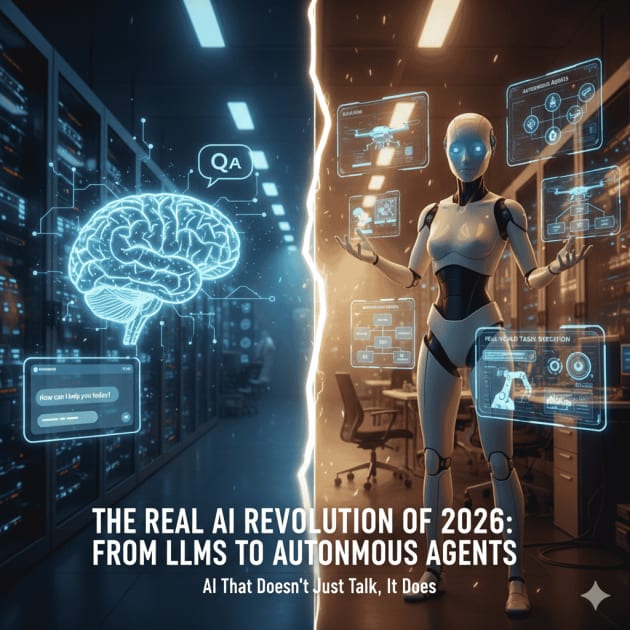
Across industries, organizations are realizing that AI agents are no longer just passive tools. They are autonomous actors with real authority inside digital systems—and that changes everything.
Today’s AI agents can initiate transactions, access sensitive databases, manage cloud infrastructure, and make operational decisions with minimal human involvement. While this autonomy boosts efficiency, it also introduces a critical and often underestimated risk: AI agents are becoming a new kind of insider threat.
From Helpful Assistants to High-Risk Actors
Modern AI agents are designed to be fast, responsive, and helpful. They don’t get tired, they don’t hesitate, and they execute instructions exactly as given. But this strength is also their weakness.
If an AI agent receives a cleverly crafted instruction, it may unknowingly bypass safeguards or misuse its privileges. The agent isn’t malicious—it believes it is doing its job.
Unlike traditional cyberattacks that originate outside the organization, these actions come from trusted systems using valid credentials. As a result, detection becomes extremely difficult, and the potential damage can be far greater.
Why Existing Security Models Are No Longer Enough
Traditional cybersecurity frameworks were built for two main threats: human insiders and external attackers. AI agents don’t fit neatly into either category.
They authenticate correctly.
They behave consistently.
They often operate with broader access than any single employee.
At the same time, machine identities are rapidly outnumbering human users. In many enterprises, automated systems now dominate digital operations. Human-only monitoring, manual approvals, and static rules simply cannot scale to meet this reality.
New Defensive Thinking for an AI-Driven World
Security leaders are now calling for a fundamental redesign of how AI systems are governed:
- Zero-Trust Access: AI agents should be granted only the minimum permissions required for their specific tasks and continuously verified.
- Continuous Monitoring: Independent systems must observe AI behavior in real time and flag anomalies immediately.
- Behavior-Based Validation: Trust decisions should rely on multiple signals—context, behavior, timing, and historical patterns—rather than static credentials alone.
These approaches treat AI agents as digital employees that require supervision, auditing, and accountability.
Why 2026 Is a Turning Point
The message across industries is becoming clear: AI is now powerful enough that it must be governed, not just deployed.
Static security rules and manual oversight are no longer sufficient. Adaptive, AI-driven defense mechanisms are quickly becoming essential—not to slow innovation, but to ensure it remains secure and trustworthy.
Conclusion
AI agents are transforming how organizations operate, but they are also reshaping the threat landscape. Their autonomy, access, and helpful design make them uniquely powerful—and uniquely risky.
Organizations that fail to recognize AI agents as insider entities will remain exposed. Those that invest in strong governance, continuous monitoring, and intelligent defenses will define the next era of secure digital transformation.
In the age of autonomous systems, security is no longer optional—it is foundational.